Collezione di Rose rugose
Collezione di Rose rugose
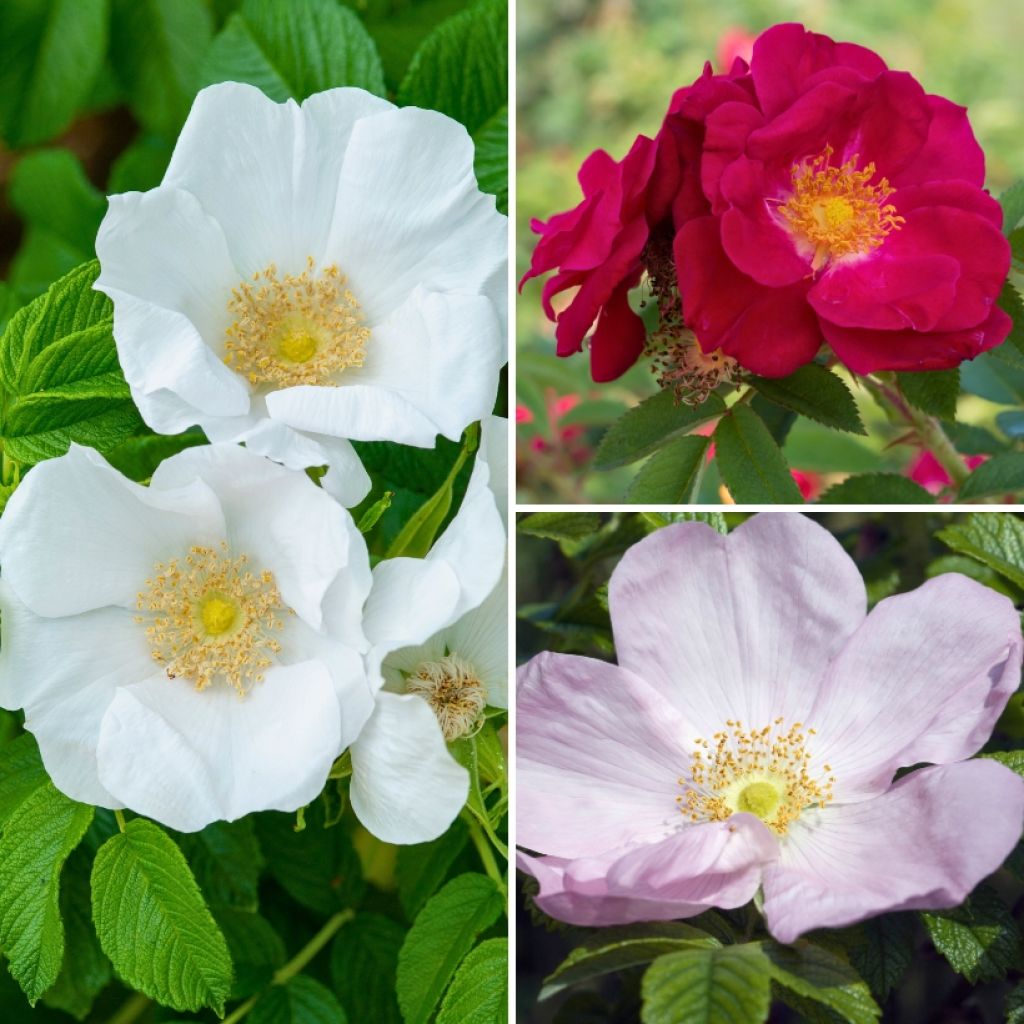
Rosa x rugosa Alba, Rubra, Frau Dagmar Hastrup
Rosa rugosa
Promozione speciale di rientro!
10 € in omaggio ogni 50 € di acquisto! E fino a 40 € in omaggio su un unico ordine.
Come funziona?
1. Fai i tuoi acquisti
Aggiungi le tue piante preferite al carrello. Per ogni 50 € di acquisto (escluse le spese di consegna, i buoni acquisto e l’opzione senza plastica), ti offriamo un buono acquisto da 10 €.
50 € di acquisto = 10 € in omaggio
100 € di acquisto = 20 € in omaggio
150 € di acquisto = 30 € in omaggio
200 € di acquisto = 40 € in omaggio
2. Completa il tuo ordine
Una volta raggiunta una delle soglie, completa il tuo ordine. Puoi anche scegliere la data di consegna!
3. Ricevi il tuo buono acquisto
Non appena il tuo ordine sarà spedito, riceverai un'email con il tuo codice personale e l’importo del buono acquisto.
4. Utilizzalo sul tuo prossimo ordine
Il tuo buono acquisto è valido per 90 giorni dalla data di ricezione. Può essere utilizzato una sola volta, su un nuovo ordine di importo almeno pari al valore del buono, escluse le spese di consegna.
Da sapere: I buoni acquisto sono cumulabili con le altre offerte in corso, ma non sono né divisibili né rimborsabili.
Consegna a domicilio o a staffetta (a seconda delle dimensioni e della destinazione)
Importante: al momento della consegna, l'ufficio doganale del proprio Paese potrebbe addebitare dei dazi doganali.
Programmare la data di consegna,
e scegliere la data nel carrello
6 mesi garanzia di permuta su questa pianta
Altre informazioni
Garantiamo la qualità delle nostre piante per un intero ciclo di crescita e sostituiremo a nostre spese qualsiasi pianta che non si riprenda nelle normali condizioni climatiche e di impianto.
Descrizione del prodotto
Our Rose rugosa Collection is ideal for lovers of natural and resilient gardens, with three varieties naturally resistant to diseases, whose fragrant flowering extends from June to September. These shrub roses offer simple, bright, unassuming flowers, well presented to pollinators, followed by decorative and edible fruits. Robust and hardy, they adapt to any well-drained soil, even poor and quite dry. You can use them to enrich a flowery country hedge or to create a large bed with natural charm.
The collection consists of:
1 x Rosa rugosa 'Alba': This rose reaches a height of 1.50 m with white, simple and bright flowers. Its flowering starts in June and lasts until September. Its thick, bright green foliage brings a soothing contrast to the garden.
1 x Rosa rugosa 'Rubra': A rose 1.20 m high, with deep pink, almost purple, flowers with an enchanting fragrance. Its flowering starts in June and lasts until the end of summer. The dark green, crinkled leaves are disease-resistant and withstand varied climatic conditions well.
1 x Rosa rugosa 'Frau Dagmar Hastrup': This low rose of 80 cm offers a tender pink, delicately scented flowering, appearing from June. Its compact shape and intense, slightly shiny green foliage make it a perfect choice for the front of a bed.
Bare-root roses, i.e., with their roots surrounded by soil but without a pot, require careful planting to root well. The best time to plant them is from October to December. These rugosa roses should be planted in full sun in well-drained soil, whether sandy, humus-rich, or somewhat clayey. For a hedge, space the plants 60 cm apart for a dense and natural effect; in a bed, alternate heights by placing Rosa 'Frau Dagmar Hastrup' at the forefront, Rubra in the background, and Rosa rugosa Alba in the center for a harmonious transition. To create a generous and uniform hedge, plan for a plant every 70 cm.
To create a country bed with this collection of Rosa rugosa, plant three Achillea 'Lilac Beauty' for their fine foliage and pastel pink umbels, two Roman Chamomiles 'Treneague' which will bring a touch of white and fragrant softness, and four feet of Scabious 'Butterfly Blue' for their light and airy flowers, ranging from blue to mauve. Plant the achilleas and scabious around the roses to structure the bed, and place the chamomiles at the front for a natural and abundant effect. This bed covers approximately 4 m² and creates a resilient country ensemble.
In a hedge, combine these Rosa rugosa with the Amelanchier alnifolia 'Martin', a Japanese Quince, and a Dogwood 'Sanguinella'. Planted alternately with the roses, these shrubs create a flowery, sturdy, and attractive hedge that harbours a rich biodiversity while structuring the garden naturally.
Segnala un errore nella descrizione del prodotto
Porto
Fioritura
Fogliame
Piantagione e cura
Rose rugose prefer a sunny location (at least 4 to 5 hours of sun per day) but sheltered from the scorching midday rays and strong winds. They appreciate loose, permeable, and humus-rich soils. They will adapt to any garden as long as the soil is well worked and sufficiently rich.
Roses delivered with their roots surrounded by soil but without a pot require careful planting to establish well. Here are the essential steps to give them the best chance of recovery:
-
Prepare the rootballs: Before planting, soak the rootballs in a bucket of water for about 20 minutes. This hydrates the roots well and promotes better recovery.
-
Dig an appropriate hole: Dig a hole twice as wide as the rootball of each rose, and slightly deeper. Enrich the extracted soil with compost or potting soil for nutrient supply, especially if the soil is poor.
-
Loosen the bottom of the hole: To prevent waterlogging and facilitate rooting, loosen the bottom of the hole well and add a handful of crushed horn or slow-release fertilizer, then lightly mix with the soil.
-
Place the rose in the hole: Position the rootball so that the collar (area between the roots and the branches) is at ground level or slightly below. Fill around the rootball with enriched soil, gently compacting with your hands to eliminate air pockets.
-
Water generously: Water generously after planting, even if the soil is moist, to compact the soil around the roots. This also facilitates contact between the roots and the surrounding soil.
-
Mulch the base: To retain moisture and protect young roots, add organic mulch around the base. It will also help limit weeds and protect the roots in case of frost.
Quando piantare?
Per quale località?
Trattamenti
Questo articolo non è ancora stato recensito; sii il primo a condividere la tua esperienza.
Prodotti visualizzati di recente
Non hai trovato quello che cercavi?
La rusticità è la temperatura invernale più bassa che una pianta può sopportare senza subire gravi danni o addirittura morire. Tuttavia, la rusticità è influenzata dalla posizione (zona riparata, come un patio), dalla protezione (copertura invernale) e dal tipo di terreno (la rusticità è migliorata da un terreno ben drenato).
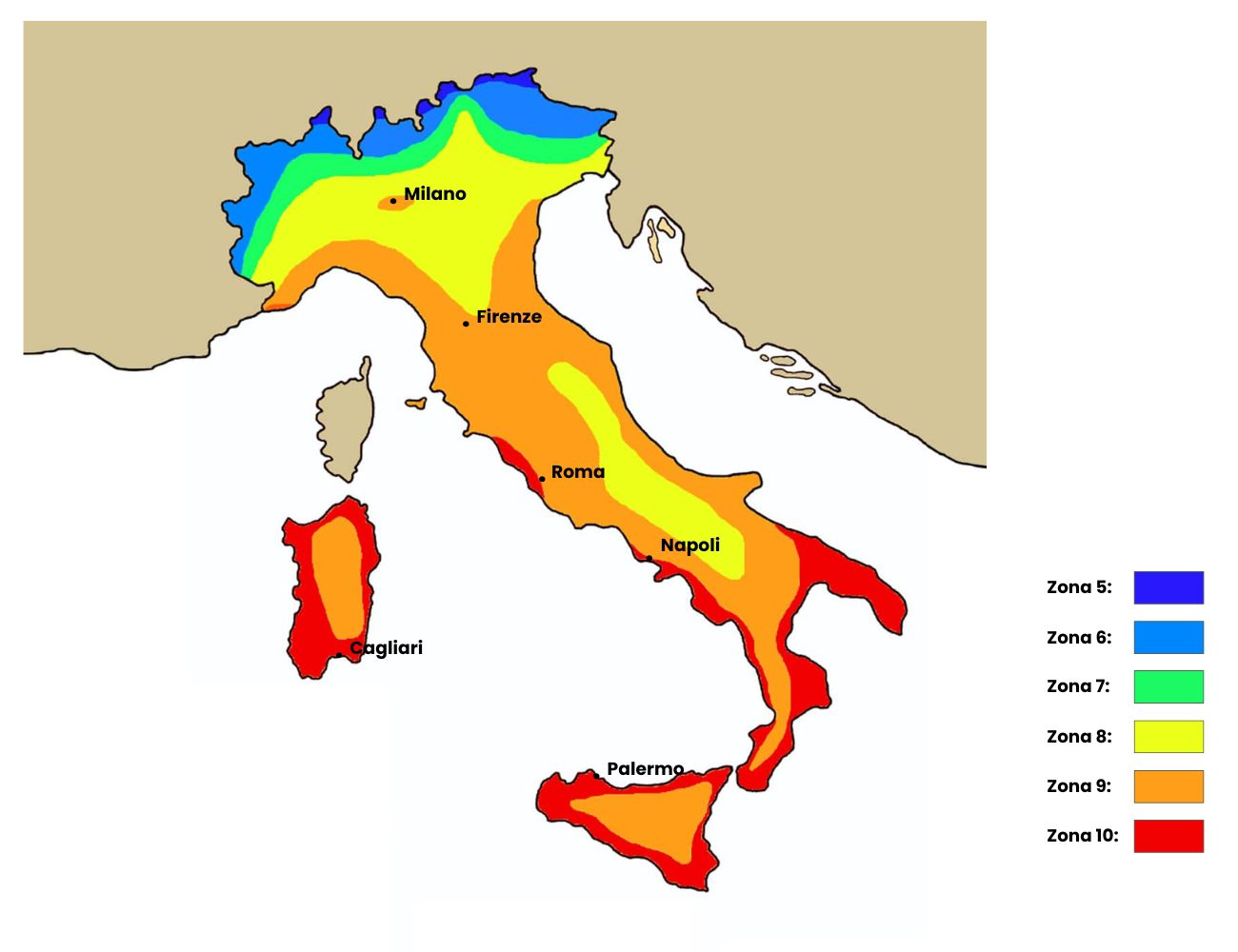
I periodi di semina indicati sul nostro sito web si riferiscono a Paesi e regioni all'interno della Zona USDA 8 (Francia, Regno Unito, Irlanda, Paesi Bassi).
Nelle zone più fredde (Scandinavia, Polonia, Austria...), ritardare le semine all'aperto di 3-4 settimane o seminare sotto vetro.
Nei climi più caldi (Italia, Spagna, Grecia, ecc.), anticipare la semina all'aperto di qualche settimana.
Il periodo di raccolta indicato sul nostro sito web si riferisce ai Paesi e alle regioni della zona USDA 8 (Francia, Inghilterra, Irlanda, Paesi Bassi).
Nelle zone più fredde (Scandinavia, Polonia, Austria...) la raccolta di frutta e verdura potrebbe essere ritardata di 3-4 settimane.
Nelle zone più calde (Italia, Spagna, Grecia, ecc.), la raccolta avverrà probabilmente prima, a seconda delle condizioni meteorologiche.
Il periodo di piantagione indicato sul nostro sito web si applica alle regioni situate nella zona 9a USDA (Pianura Padana e centro della penisola: Milano, Torino, Bologna, Firenze, Roma). Tale periodo puo’ variare a seconda del luogo di residenza:
- Nel nord-est e nelle Prealpi (Verona, Trento, Udine, Trieste, Aosta), ritardate la piantagione di 2-3 settimane in primavera e anticipatela di 2-3 settimane in autunno rispetto alle date indicate.
- Nelle Alpi e negli Appennini (Courmayeur, Bolzano, Cortina d'Ampezzo, L'Aquila), è preferibile piantare in tarda primavera (maggio-giugno), una volta scongiurato rischio di gelate tardive, oppure alla fine dell’estate (agosto), prima che le gelate precoci si verifichino già a settembre in alta quota.
Nei climi temperati, la potatura degli arbusti a fioritura primaverile (forsizia, spiree, ecc.) deve essere effettuata subito dopo la fioritura.
La potatura degli arbusti a fioritura estiva (lillà indiano, perovskia, ecc.) può essere effettuata in inverno o in primavera.
Nelle regioni fredde e con piante sensibili al gelo, evitate di potare troppo presto quando possono ancora verificarsi forti gelate.
Il periodo di fioritura indicato sul nostro sito web si riferisce alle regioni situate nella zona 9a USDA (Pianura Padana e centro della penisola: Milano, Torino, Bologna, Firenze, Roma).
Esso varia a seconda del luogo di residenza:
- Nel nord-est e nelle Prealpi (Verona, Trento, Udine, Trieste, Aosta), la fioritura sarà ritardata di 2-3 settimane rispetto alle date indicate, a causa della primavera più fresca e degli inverni più rigidi.
- Nelle Alpi e negli Appennini (Courmayeur, Bolzano, Cortina d'Ampezzo, L'Aquila), la fioritura sarà ritardata di 4-6 settimane. Avverrà principalmente tra giugno e agosto a seconda dell'altitudine.
Paese di consegna e lingua
La tua posizione sembra essere:
La tua posizione è:
Per godere della migliore esperienza sul nostro sito, è possibile cambiare:
Paese di consegna:
-
 Austria
-
 Belgio
-
 Bosnia ed Erzegovina
-
 Bulgaria
-
 Cechia
-
 Cipro
Cipro
-
 Croazia
-
 Danimarca
-
 Estonia
-
 Finlandia
-
 Francia
-
 Germania
-
 Grecia
-
 Irlanda
-
 Islanda
-
 Italia
-
 Lettonia
-
 Liechtenstein
-
 Lituania
-
 Lussemburgo
-
 Malta
Malta
-
 Paesi Bassi
-
 Polonia
-
 Portogallo
-
 Romania
-
 Serbia
-
 Slovacchia
-
 Slovenia
-
 Spagna
-
 Svezia
-
 Svizzera
-
 Ungheria
Lingua:
-
Francese
-
 Inglese
-
Spagnolo
-
Italiano
-
Tedesco
-
Portoghese
-
Olandese
-
Finlandese
Il mio account
Salve
I miei elenchi di preferiti
Il mio carrello
Accesso / Registrazione
Sei già cliente?
Questo modulo è protetto da reCAPTCHA - si applicano l'informativa sulla privacy e i termini di servizio.
Non sei ancora cliente?
Crea il tuo account per poter seguire il tuo ordine, accedere al nostro servizio clienti e, se lo desideri, approfittare delle nostre prossime offerte.